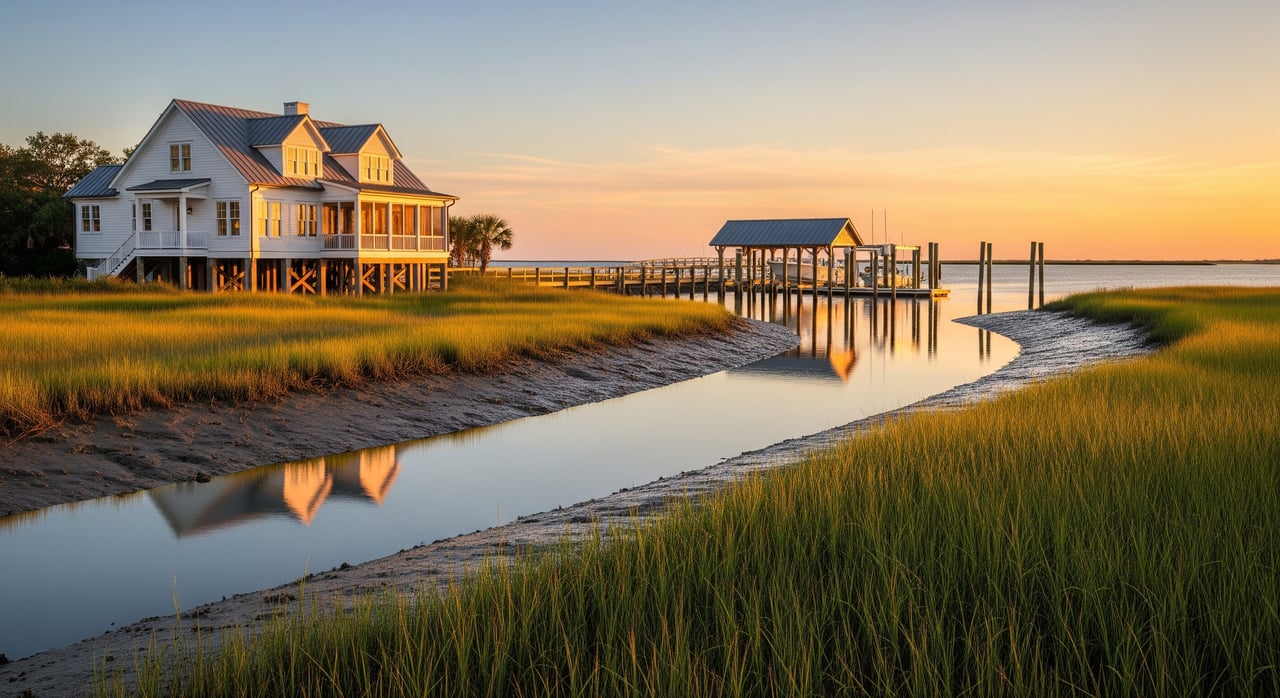
Dreaming of launching your boat from your backyard, but not sure whether a tidal creek or deepwater property fits your life? You are not alone. Buyers in Mount Pleasant often weigh serene marsh views against year-round navigability for larger boats. In this guide, you will learn the real differences in boat access, views, maintenance, flood and insurance factors, lifestyle, and a step-by-step checklist to verify any specific lot. Let’s dive in.
What tidal creek means in Mount Pleasant
A tidal creek here is a narrow channel winding through salt marsh that rises and falls with the tide. Depth can drop significantly at low tide, and some stretches get very shallow. The scenery is classic Lowcountry: marsh grasses, birds, fish, and meandering waterways. Views tend to be intimate and sheltered rather than big open-water panoramas.
What deepwater means locally
Deepwater usually refers to waterfront on channels or harbor areas with consistent, navigable depth throughout the year. These lots often connect directly to Charleston Harbor, the Cooper River, or other maintained channels. You get broader, open-water views and easier access for larger vessels. Expect more maritime activity and passing wakes.
Boat access: match your boat and schedule
Your boat draft and when you want to go out will often decide the best fit.
- Small skiffs, kayaks, paddleboards: with minimal draft under about 1 to 2 feet, you can enjoy most waterways, including many tidal creeks.
- Small center consoles or bay boats: with about 2 to 3 feet of draft, you can usually operate in many creeks at mid to high tide, but you may be limited around low tide if the creek shoals.
- Larger boats, express cruisers, or sailboats: with 4 to 6+ feet of draft, you will typically need deepwater access and maintained channels.
Before you fall in love with a view, confirm real-world conditions. Check bathymetry and tide ranges using the NOAA tides and currents tools for Charleston Harbor to see typical depths and timing. Start with the official tide stations and nautical charts provided by NOAA Tides and Currents.
Docks, lifts, and shoreline features
The right setup protects your boat and improves usability:
- Fixed piers are common where bottoms are stable and tidal range is manageable.
- Floating docks help when mudflats show at low tide or when tides vary.
- Boat lifts keep hulls clean and aid storm preparation, but access depth and permitting can limit lift size.
- Bulkheads and riprap protect shorelines and come with maintenance responsibilities.
Any new dock or modification usually needs permits from federal, state, and local authorities. Federal permitting and navigation questions often involve the U.S. Army Corps of Engineers. State-level coastal permitting and buffer rules are administered by the South Carolina Office of Ocean and Coastal Resource Management. In some tidal creek locations, private dredging has been used to maintain access, which adds ongoing cost and planning.
Lifestyle trade-offs you will notice
Tidal creek living feels close to nature. You may enjoy quiet mornings, wildlife viewing, kayaking, and casual fishing. You will likely have fewer passing boats and more privacy. In warmer months, proximity to marsh can mean more mosquitoes and no-see-ums.
Deepwater living centers on boating freedom. If you run larger boats, want flexible launch times, and enjoy quick access to the harbor and offshore runs, deepwater is compelling. You may experience more boat traffic, navigational lights, and broader horizon views that capture sunrises or sunsets.
Property, risk, and cost factors
Both tidal creek and deepwater homes sit within a tidal environment. Coastal storm surge can push water inland regardless of frontage type. Elevation and finished floor height matter most. Review flood zones and base flood elevations through the FEMA Map Service Center, and request any available Elevation Certificate.
Flood insurance may be required if your lender requires it based on flood zone. Premiums vary by zone and construction features, with coastal high-hazard VE zones typically costing more than AE or non-SFHA areas. Homeowner insurance can also vary; deepwater sites may see higher exposure to wind and wakes. Always obtain quotes for the specific property.
Maintenance is an ongoing reality on saltwater. Pilings, docks, and bulkheads need inspection and periodic repair. Salt accelerates corrosion and wood rot. Some tidal creek properties may require periodic dredging to keep access viable, while deepwater properties on maintained channels may face fewer dredging needs.
Utilities differ by area. Much of Mount Pleasant connects to municipal sewer, but fringe waterfront pockets can rely on septic or grinder pumps. Confirm service type and request maintenance records for any on-site systems.
Ownership rights over submerged lands are governed by state law. You typically have riparian access rights, not ownership of the water bottom. Verify docking rights, any recorded easements, and community restrictions on water access before purchase.
Neighborhood context in Mount Pleasant
Areas around Shem Creek showcase classic tidal creek living with boardwalks and restaurants along the water. In contrast, pockets along the harbor or maintained channels offer a deepwater feel with wider sightlines. Daily needs like commuting, shopping, and school access are often independent of waterfront type. Most buyers balance their ideal waterfront experience with proximity to services and downtown Charleston.
Resale and market lens
Deepwater frontage often commands a premium in many coastal markets because it appeals to buyers with larger boats and flexible boating schedules. That said, pricing still depends on neighborhood demand, lot size, view corridors, and overall setting. Tidal creek properties can be strong performers for buyers seeking privacy, wildlife, and a quieter, nature-forward lifestyle.
Buyer verification checklist
Use this checklist to compare specific addresses and reduce surprises:
- Water depth and navigability
- Ask the listing agent for measured depths at mean low water and any known shoals.
- Review tide ranges and local chart soundings using NOAA Tides and Currents.
- Speak with nearby marinas or boatyards about recent channel conditions.
- Docks, lifts, bulkheads
- Request permits, as-built drawings, and maintenance history for any waterfront improvements.
- Confirm permitting authority involvement: U.S. Army Corps of Engineers and South Carolina OCRM.
- Dredging and responsibilities
- Determine if channels are federally or state maintained, or if private dredging is required. Clarify who pays and any access easements.
- Flood and elevation
- Check flood maps via the FEMA Map Service Center and request an Elevation Certificate if available.
- Ask for any historical flood disclosures provided by the seller.
- Utilities and sewer
- Confirm sewer availability versus septic or grinder pump, and request maintenance records if applicable.
- Title, easements, and shoreline rights
- Ask for recorded easements, covenants, and any riparian or right-of-way documents that affect docking.
- Consider a current boundary survey showing the mean high water line and any encroachments.
- Insurance and costs
- Obtain preliminary flood and homeowner insurance quotes to compare with inland homes.
- Local knowledge visit
- Visit at different tides and times to observe wakes, lighting, and actual accessibility.
- Talk with neighbors, marina operators, or local boat captains about shoaling tendencies.
Which waterfront is right for you?
Use these quick prompts to narrow your choice:
- You own a kayak or a shallow-draft skiff and value privacy and wildlife. A tidal creek lot may fit your lifestyle.
- You run a 22 to 25-foot center console and prefer flexible launch times. Deepwater simplifies schedules, while some creeks can work with mindful tide planning.
- You operate a cruiser or sailboat with 4 to 6+ feet of draft. Deepwater with maintained channels is typically the safer bet.
- You prize big-sky, open-water views and can accept more boat traffic and wind exposure. Deepwater aligns with your goals.
- You want a quieter setting with marsh perspectives and less traffic. Tidal creek may be your match.
When you are ready to compare specific addresses, bring a practical, boat-first mindset and lean on local permitting and marine experts for clarity.
If you want tailored guidance and a shortlist of waterfront homes that match your boat, schedule, and lifestyle, reach out to Nora Delyra. With 25+ years of helping buyers across Mount Pleasant and Charleston, she will help you verify depth, docks, permits, and flood factors so you can move forward with confidence.
FAQs
What counts as “deepwater” in Mount Pleasant?
- Deepwater typically means year-round navigable depths suitable for larger boats and direct connection to harbor or maintained channels. Always verify actual depths at mean low water.
Can a 22-foot center console work on a tidal creek lot?
- Often yes at mid to high tide if the creek has 2 to 3 feet of depth, but access can be limited at low tide. Confirm depths, channel conditions, and timing using official NOAA resources.
Do tidal creek homes flood more than deepwater homes?
- Both can face tidal flooding and storm surge. Elevation, finished floor height, and flood zone drive risk more than frontage type. Check the FEMA Map Service Center and obtain an Elevation Certificate.
What permits are required to build or modify a dock?
- Dock work usually needs approvals from federal and state authorities, commonly the U.S. Army Corps of Engineers and South Carolina OCRM, plus local permits where applicable.
How do I check flood zone and elevation for a specific address?
- Use the FEMA Map Service Center for flood maps and request an Elevation Certificate. You can also review property records through Charleston County GIS to confirm parcel details.